The Border Closing Ceremony; A Show of Patriotism and MachoismWe reached Pakistan by land from India at the Atari/Wagah border. After crossing into Pakistan, we stayed at the border to watch the closing ceremony - a one hour long show of patriotism and machoism between Pakistan and India. There are lots of flag waving and chants of "Pakistan, Pakistan, Pakistan" on this side and "Hindustan, Hindustan, Hindustan" on the other side. The Pakistan Rangers came out - giant men who looked incredibly dashing in their dress uniform and dark mustaches. They marched quickly around feigning anger towards the India side with severe facial expressions, squared shoulders, and dismissive hand waves. The soldiers on the India side followed suit.
After an hour of this, amid the cheers, the laughter and the patriotic shouts, the flags were finally lowered. This is supposed to be done completely in unison, so that one flag is never lower than the other. When India's flag accidentally dropped a few inches lower than Pakistan's, there were audible gasps across the crowd, with India trying to pull it back up and Pakistan hurriedly lowering theirs! A few minutes later it was tit for tat when Pakistan dropped their flag down a few inches below India's. After this all went well and the flags were lowered in unison before the gates slammed shut for the night. The dashing Rangers marched out (much to my disappointment). This ceremony is repeated daily after the land border closes, and every day hundreds, if not thousands of people turn out to watch it!
The women's side. Foreigners get up front 'box' seats. India's ceremony on the other side of the gate is not segregated like Pakistan's.

The men get a bit more rambunctious then the women.

Flag waving patriotism

A probable requirement to being a ranger involved in the closing ceremony is being huge; most were probably close to seven feet tall and built like bricks

Pakistani Rangers in front of the gate that divides India from Pakistan. Cointa, you would like them, too!

A Ranger makes mock angry gestures towards India

The Flags are about to be lowered

Finally, the flags are lowered
 A Stay with a Pakistani Family
We spent our first five days in Pakistan with the Christian family of Naveed Walter, which gave us a different view of this country that is over 90% Muslim. Naveed is the National President of Crown Pakistan, a Christian organization that helps people manage their finances according to Bible. He is also the president of Human Rights Focus Pakistan, a charity that helps widows and orphans, educates young girls, and works to reduce discrimination and persecution against Christians in Pakistan.
The hospitality of Naveed and his family was amazing! We were warmly received, fed, picked up at the border and toured around like royalty in an air conditioned car with a driver. We ended up spending Pakistan's Independence Day with Naveed and his family in the village of Kushpur. Naveed's sister-in-law Humera was about 8 months pregnant, and the baby decided this day that he wanted independence himself! It was a difficult delivery and Humera ended up needing surgery and a blood transfusion. To obtain the blood needed, her friends and family in the waiting area were all tested for compatibility. One friend was found to be compatible and he donated the blood then and there! The baby had a few problems to begin with, being premature, but is OK now.

During our stay with the family, one of the things that really struck me as different about the Pakistani Christians was their unity. It does not matter whether a person is Catholic, Protestant, Baptist, etc - they simply call themselves and people of other denominations Christians. This is a big difference from what I have seen in the USA, where many people will whole-heartedly insist that their particular brand of Christianity is the only "right" and "true" way. Tim found it interesting to see the strength of faith among people who suffer active and passive persecution and discrimination, and who must sacrifice things to keep their faith. This is unlike many American Christians, who are free to believe whatever they like without persecution, and have become complacent in their faith.
Celebrating our 2nd anniversary with Naveed and his family

Being drawn around Kushpur in a horse pulled carriage

The houses are all built around high walled, central courtyards with all the windows and doors facing in. From the street, one only sees blank walls.

Water buffaloes occupy the rear courtyard of the home.

Getting ready to board the bus for Rawalpindi in our Salwar Kameez, the local clothing of choice for most Pakistanis. this clothing is extremely comfortable to wear in hot weather.
 Hunza and Nagar Valley
After leaving Naveed's family, we hurried on up the Karakorum Highway towards Karimabad, the heart of the Hunza valley. This bus ride was long and bumpy, but otherwise nothing of much interest happened, except that when we stopped for dinner, I, being a woman, was rushed down into the dark, musty, fan-less basement to eat separate from the men. Some of the areas in between Islamabad and Gilgit are pretty strict. Finally, after nearly 24 hours on two buses we reached Karimabad. Here we received warm welcome. Tourism here is slow this year due to events in Islamabad, and people stopped in the street to shake our hands, try on my big sunglasses, and welcome us and tell us they are glad we are here. They reassured us, without our asking, that Hunza was safe and the people here were peaceful. They did, however, warn us against going further southwest, near the Afghanistan border, and in the Tribal Areas. If we did go there, we were advised to say we were Italian, Spanish, Canadian, etc!
However, we met several Pakistani tourists from the tribal areas, who were friendly and wanted to have their photos taken with us! The first asked us where we were from. "Alaska" we said, as we often do, because many people don't know Alaska is part of the US. This man then told us he was from the tribal areas. Having been warned away from these areas, we did not quite know what to expect meeting someone from there. Did he know where Alaska was??? Tim started fishing for more information, and began to ask "Oh, do you mean by..." The man interrupted him, laughing, and clarified "I am from Al Qaeda country". He told us he was here looking for peace! He proceeded to tell us how he visits this area every year, and gave us recommendation of the most beautiful places to go. Then both he and his friend took turns posing with us for photos. "To show my wife" he told us. Afterwards, they shook Tim's hand (not mine!) and left.
Tim and I made several friends in Karimabad who we spent many hours with, drinking tea and discussing many things, including politics, religion, women in Pakistani society, and traditional customs. The Hunza people are mostly Ismaili Muslims, which is a minority group that spreads across north Pakistan, northeast Afghanistan, south Tajikistan and other areas of the Muslim world. They follow the advice and spiritual leadership of the Prince Karim Aga Khan, who is the 49th descendant of the Prophet Mohammad through his daughter and son-in-law Ali. He lives in France and has introduced western style education to the Ismaili people. The people of the Hunza valley are very proud of their educational achievements and the fact that they have an almost 100% literacy rate among both males and females. The Ismailis tell me that some Sunni and Shia Muslims do not think they(the Ismailis)are Muslims, but they think of themselves as more progressive and educated then those who say this. Ismailis no longer follow the Islamic shariah law at the advice of the 24th spiritual leader and they have a much more relaxed attitude towards women. They do not practice plural marriage, but they do practice family planning (2 or 3 children), and they are peace-loving people, not believing in such things as holy wars.
We also met a couple of people in Pakistan who wanted us to give specific messages to the American people, which we promised to post here. Almost immediately after crossing the border, a young man engaged Tim in conversation, learned we were from America and bought us both a Pepsi. His friend asked Tim "Do these people look like a bunch of terrorists?"
"No." Tim answered.
"We are not. Please tell the American people that." the friend responded. The next man whom Tim met in Karimabad was Manzoor Baig from Karachi, in the far south of Pakistan. He claimed to speak for all Muslims, his political party, and even fundamentalists and had a specific message which Tim wrote down, word for word. Here it is: "Pakistan people love America. The bearded mullah and fundamentalist as well as men and women in Pakistan promote freedom of thought, speech and action, but the people of Pakistan hate American politics; the threat to non-developed countries and the dictation to act according to American wish and will, or else America will bomb them back into the Stone Age and bulldoze their infrastructure."
The Hunza valley (and the Nagar valley across the river) is a magnificently beautiful place, one of the most beautiful I've seen. It is in the midst of many 6000 and 7000+ meter peaks of the Karakorum Range. We spent several days here day hiking up into valleys surrounded by peaks covered in massive hanging glaciers and snow flutes. Altogether, we stayed in Pakistan just over two weeks, which is not near long enough. Visiting Pakistan was an amazing experience - the hospitality, the scenery, and the culture, and I am already scheming how to get back here again for at least one or two months!Pakistan seemed especially magical to us because of the low number of tourists this year. It is almost like an undiscovered area, but with infrastructure to support tourism. There is a lot of negative view and reports of Pakistan in the western media, and there might be some areas that are not very safe for travel. However, the northern areas that we traveled in felt quite safe. If you are able to plan a trip there you will not be disappointed and we highly recommend it.
Baltit fort in Karimabad

The friendly ticket seller at Baltit Fort
Rakaposhi peak at sunrise from the Duiker view point above the Eagles Nest Hotel (near Karimabad)


Lady Finger and Ultar peak from the Duiker viewpoint at sunrise. One hike we did went to the base of these peaks

Golden Peak at sunset from the view point in Duiker

Another unknown peak at sunset

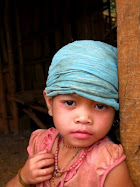
Two girls near Karimabad

Old town Ganesh, near Karimabad


A window in the four hundred year old family mosque in Ganesh

Walking along the old irrigation chanel to Ultar glacier hundreds of feet above the river, a marvel of engineering done without modern technology.

Rakaposhi peak under the moon from Minipin

Near Rakaposhi base camp, a hike that starts at Minipin

Mountains surrounding Passu


Hiking up Borit Sar, near Passu. View is to the NW.

View from Borit Sar to the SW. Despite the poor lighting, it was still a fabulous scene.

Looking across from Borit Sar at some amazing snow mountains

More peaks seen from Borit Sar

A decorated Pakistani cargo truck

Tim, in traditional Pakistani dress with the men who fixed his shoes for about 60 cents in Sost, Pakistan's border town with China. My grandfather says "put a turban on him and he will look like Taliban". Do you agree?

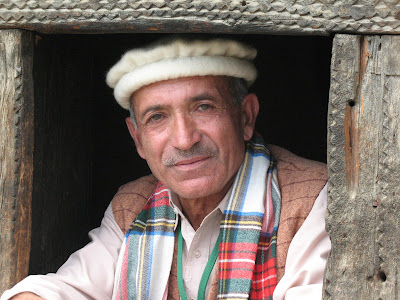
The Hunza people have beautiful smiles, but when they pose for photos they try to look very solemn.

The bus from Sost into China unloaded for prayer time near the top of the pass which divides the two countries