Tuesday, August 7, 2007

Padum to Darcha

Padum to Darcha : A Trip Diary

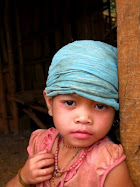
Traditionally dressed women near Padum


7/26 Padum to Reru
Please see blog entry “A Zanskar Wedding”


7/27 Reru to Pepula
7/28 Pepula to Purne

At Reru, our laundry soap is stolen. In Pepula, our dish soap and “Mister India” steel scrubber come up missing. Sonam is tearing up the tent, call for Mister India. Finally he concludes that it has been taken from our tent by the campground supervisor while he was taking the horses to graze up the mountain. “Very dangerous place” he tells us. “Many people stealing.” He goes on to describe cook tents being stripped bare of ata (flour) and shoes, just barely peaking out from under tent flies, being swiped during the night. The next morning, the dish soap and Mister India are mysteriously returned to us, laid outside of the tent.

I set off earlier than Tim and Sonam this day, little knowing my peril! I see many wolf prints, and stalking the wolves are huge cat tracks, possibly those of a snow leopard. The prints are nearly 20cm long and I photograph them next to my trekking pole to show Sonam later. On seeing them, Sonam begins shaking his head and moaning. “Oh, Oh, Oh. Very dangerous” he says. “Is Tamo. Walks like man. Long hair over eyes.” It sounds like Sonam is describing the Yeti, or Abominable Snowman!

“You do not see. If see, dead. Tear, just like paper.”

Sonam makes a ripping motion with his hands, accompanied by horror film sound effects. He shows the photo on the camera to a villager who is hanging out by the tent. The villager makes fearful sounds and they begin to converse rapidly in Ladakhi, and after reaching a consensus, Sonam turns back to me, “Yes. Is Tamo, very dangerous.”

The footprint. At the bottom near 00 cm on my pole you can see four toes. at the top a little before the 20 cm mark you see the heel.


Later that day, still hiking alone, I see a boy of maybe 12 to 14 years old walking towards me. As usual, when passing villagers, I call out a cheerful, “Julay” (hello) with a smile. The boy calls out an answering “Julay” with a smile. Then, just as he is passing by, I notice it. His pants are opened up. It is no accident. He is standing at full attention above them! I have run into the Zanskar Flasher! I continue on and don’t look back, refusing to give him the satisfaction of knowing that I noticed (after all, I almost didn't!).

Later this day, danger coming in threes, I saw two horses with riders almost fall off the narrow path and down a steep slope to certain death below. One horse startled and whirled about on the narrow trail and lost not only his own footing, but knocked the horse behind him half off the trail. It was a mad and desperate struggle for the horses to get back onto the trail, with the riders flinging themselves off and pulling on the horses any way they could. For several heart breaking seconds it hung in the balance whether the horses would make it back on safe ground, or fall to their deaths below. They did make it back on, but it was a truly terrifying moment.

Dancers we saw at the school when leaving Reru


Hiking up the river valley on the way to Pepula


The old, fortified village of Itchtar built up on a cliff on the way to Pepula.


A woman with baby I passed on the trail shortly after passing the Zanskar flasher.


7/29 Phuktal Gompa
Please see blog entry “A Day at Phuktal Gompa”


7/30 Purne to Tetha
The people in Zanskar and Ladakh are friendly and curious, with most beautiful smiles, which they freely give along with a heartfelt shout of “Julay, Julay.” The curiosity in Tetha was a bit over the top, though. This was a prosperous village, with many green terraced fields, solar cells and satellite dishes on the roofs, right next to piles of hay and dung patties for burning, and many, many children! The children and the adults alike swarmed around us, peering in the tent, coughing in our faces, fingering our things with fingers just used to pick snotty noses. Sonam tried to show them how to cover their mouths when coughing, but they only laughed at him, so it’s no wonder every child in the village was sick! A villager from the next village stopped and warned that they were looking to steal. “They OK when talking, but as soon as not talking, they stealing. Especially that one,” he says and points to a particularly persistent boy with polio who remained with us until almost dark before hopping away on his good leg, and who hopped back into camp the next morning at sunup. On breaking camp, Tim went on ahead, but Sonam had me stay with him until everything was packed, for fear of all the people stopping by to rifle through our things.

Hay and dung patties stacked on the roof of homes


The boy with polio pearing into our cook tent (and Sonams sleeping tent)


One of the villages


7/31-8/2 Tetha to Kargyak and rest days
We reached Kargyak around noon. After safely crossing six mountain passes, it was here, on a flat grassy river valley, that one of the horses was injured. Nori was kicked by the crazy horse, Poru, hard enough to crack the bone in her upper leg. The rest of this day Nori circled the tent, putting no weight on the front leg. Sonam was beside himself and kept peeking out of the holes in his tent at Nori, silent, unable to eat or sleep that night. For the first time, he took us up on the offer of some of our brandy.

The next day, Nori, was just as bad. A horse doctor from the next village came and diagnosed her with a cracked bone and did some traditional Tibetan treatment on her. The treatment was horrible, but it helped! First Nori was hog-tied and brought down on her side. Metal rods were heated up over the kerosene stove and used to burn the flesh around the wounded area. Then, with a pocket knife (our little Swiss Army knife!) the horse doctor punctured the wound. Fluid and blood poured out and Nori was untied and allowed to stand. Immediately, she was walking better, cautiously putting a little weight on the leg! Sonam spent the rest of this day organizing for a villager to keep Nori for 2-3 months to heal. He said he would try to do this trek again in September to retrieve her.

I left then to hike back a valley we were camped near. This was a gorgeous valley that jutted straight into the heart of the Himalaya. That evening, Sonam was excited and said that maybe Nori was walking well enough to go home if we went slowly. We agreed and asked if another rest day would be good for Nori. Sonam was overjoyed and agreed on a “rest day for pony, no charging.” This worked out well for us too, as I had left the camera case behind in the valley when I put the camera in a waterproof bag for a large river crossing. Tim rested most of the previous day so he hiked back to get it while I took a rest day.

Woman on the way to the fields check out our campsite


Nori, being treated by the horse doctor


Yaks in the valley


Himalayan peaks


Fireweed, which also grows in Alaska


8/3 Kargyak to Shingo La base
8/4 Shingo La base to Rumjak
8/5 Rumjak to Darcha
Kargyak to Shingo La was a gorgeous day, hiking towards a huge unclimbed granite peak and up to the base of Shingo La, which is a pass over the Himalaya range. We woke up early the next morning for crossing the pass. It was foggy and rainy this whole day, but we were afforded small glimpses of the glaciers and peaks. It must be fabulous in clear weather! Nori made it safely over the pass and back down the other side. Often we were walking on a large boulder and scree covered glacier. The weather remained rainy all the way to Darcha, so we hiked as fast as we could and cut three days of hiking into two, covering 23 km on the last day. By crossing the Shingo La, we entered an area that was affected by the monsoon.

The scariest part of our trek came walking the last 1.5 km on the road to Darcha. Trucks came roaring up behind us and did not stop as Sonam chased the horses up the banks of the road. Often times the trucks barely missed hitting them. Afraid for Nori’s leg, I led her to camp and let Sonam worry about the other three horses. It will be difficult for him going home. It is over 300 km from Darcha to Leh, and most of it he will have to travel on the road.

Our last night in Darcha was sad saying goodbye to Sonam. We took him out to dinner, drank beer until late, and promised to send him photos of the trek. This has been the longest trek we have ever done at 25 days. It was definately a very rewarding trek with beautiful views, friendly people, and interesting culture.

Unclimbed peak


Looking back as we go up Shingo La


Tim on Shingo La. Check out his shaggy beard!


Our farewell night with Sonam

A Zanskar Wedding

Click on the photo to see the detail in the costumes.

The seven grooms representatives sing while seated against the wall the bride cries. She is the white bundle leaning against the older lady in the lower part of the photo.


Day Four of the five day Ceremony:

The section from Padum to Reru has a road being built, and it is a long, dusty walk, with many passing dump trucks and jeeps. After about 15km, I had enough of walking on the road and hitched a ride in a passing jeep for the next three kilometers to Mune. This turned out to be a rather fortuitous choice. I had found out while visiting the Mune Gompa that there was a wedding going on in Reru. Later that evening I was in Reru hanging out in front of the house with all the action, hoping for an invite, while Tim, embarrassed at my boldness, looked around the village. It was not long berfore I ran into the jeep driver, Tundup. He invited me in and soon I was drinking tea, then chang (barley beer), and eating dal and rice with the groom's father, Nayupa, and other family members. Nayupa is a tall, handsome man, fabulously arrayed in a long burgundy-purple wool coat and tall traditional Ladakh wedding hat with a white handkerchief pinned to the side for good luck.

From Tundup and Nayupa I learned that the wedding was five days long. It was the final and most important night tonight, and tomorrow was the big day of sending off the bride. The groom lived in a village far away and according to tradition did not come, but tonight seven of his representatives would arrive for the ceremonies. The marriage was arranged and the long distances between villages of bride and groom was necessary because of the small Zanskar population to minimize the chance of inbreeding.

While I was learning all this, a man in the center of the room by the chang
jug was keeping the alcohol flowing. He would turn to you and gesture and yell at you to drink, after which he would top off your glass. In addition to chang, he had bottles of stronger stuff, arrak, which is distilled from chang. It was impossible to know how much you were drinking.

Tundup eventually disappeared, but returned again. "Come, Come" he says to me urgently, "The groom's men are arriving." We run across town and he positions me by the stupa which they walk through. The representatives are fabulously dressed in bright, ornately pattered robes and fantastic, tall gold hats. After walking thorough the stupa, they begin to dance and perform rituals using some type of paint in containers. Chang and Arrak are brought out and passed about liberally. Some people have small cups hidden in their robes, but the rest drink out of cupped hands. I fail this test and spill some from my palm so an eighty-eight year old lady shows me how, without spilling a drop. Nayupa laughs and tells me "We drink for God. They do dance for God" then points towards the seven men who are slowly twirling. Tundup and Nayupa both encourage me to take photos and so my camera, which I have kept discreetly in my bag, gratefully comes out. Tim hears all the commotion and finds his way to the ceremony.

After it gets dark, it is time for the next stage in the ceremony. Nine piles of stones have been placed at equal distances apart along the village road. The groom's men begin to sing as they move towards the first pile. Drums are beating and far away, the bride's family are singing in answer, as they move towards the first pile on the opposite end. I move closer to them and see that they are twirling wildly and snapping whips in the air and at the ground. They have huge hankerchiefs pinned to their hats and clothing. Nayupa has explained this part to me. It is the question and answer ceremony. The bride's family start out by singing "Why are you here? Why have you come to our village?" The groom's representatives will answer "We have come to take away the bride." Now as the ceremony starts, Nayupa is laughing. He tells me the bride's family has responded "No, go away, you are not welcome here." This exchange will go on until late into the night. The bride and groom's representatives and family eventually will meet in the middle and even later on the brides family will signal acceptance of the groom by offering a special food. Tim and I eventually go to bed around 10pm, but we continue to hear the drums late into the night.

Day Five of Ceremony:
The next morning, I arrive early. Tundup tells me that everyone stayed up all night. He takes me to the kitchen, where I eat steamed lamb momos (dumplings). Then he tells me that the bride is in the house. The bride has not been seen until now, spending the first four days of the ceremony shut up in a house somewhere in the village. He brings me to the room where she is. Along one wall, six of the groom's men are sitting to the right of the mother, a tiny, sad looking woman. Leaning against her is a white bundle of cloth, the bride. On the left side of the bride the seventh groomsman sits. Along the opposite wall sits family and friends, all arrayed in white handkerchiefs for luck in the marriage and drinking chang and arrak. Today, Tim and I are given handkerchiefs to wear as well. I quietly take a seat near the far wall, but don't go unnoticed, as I had chosen a spot right behind chang man. Today's chang man was a beautiful wrinkled old man with a constant smile. He was in great, chang-induced humor, laughing, yelling, and pouring chang. At one point, when I tried to refuse more chang, he grabbed my leg with a vise-like fingers and gave me a painful pinch. The bride, meanwhile, spends this time wailing, crying and shouting a short phrase over and over. I imagine it was something like "I won't go, I won't go." A man across from her, possibly her father, began singing in a mournful tone. The groom's representatives joined in. They stood and the one on the left started waving a ceremonial wand over the bride (photo at top).

Later, after everyone is seated again, a man comes in with long strips of fabric. He yells something and hands one to the groomsman on the brides left, who gently tucks the cloth into the bride's waistband. She lets out a wail. This goes on until her waist is thick with fabric strips. Eventually she runs out of the room screaming with her mother and hides in the basement. I catch a brief glimpse then of her large turquoise studded headdress. Other then this small glimpse, the bride is not seen, hidden as she is in a white bundle of cloth. Later I showed Sonam, our pony guide, the photos from the wedding. He tells me that Tibetan weddings are not like this. He laughs at the white bundle and says "very dangerous. dressed like a dead body!" He also tells me that it is very important for the bride to cry and carry on, even if she wanted to leave the village. Her family and village would be very upset if she did not. It seemed also to me, though, that it must be very terrifying for her, to leave her family and village for the complete unknown of an arranged marriage with a strange man in a far off village. I hope for her that her new life and marriage will be a good one. The groom's father, Nayupa, and the representatives seem like kind, gentle people, so I have hope that her new husband will also be a kind, gentle person.

We left around 12 noon, before the send off of the bride, which would happen around 5 or 6 pm, amid many tears, I am told. Tim had come from camp only a short time before we left and so I brought him into the Lama room for a while to sit with the monks. The monks have a room set up for them, and they are here for the entire five days of the ceremony, singing prayers for the marriage and keeping candles lit. They beat drums and build many pregnant figurines out of tsampa (ground barley) dough. Grains are offered for a life of plenty. Before leaving the monks feed us a meal of noodles and tea.

It was an amazing experience to be warmly invited into this wedding, and to have Tundup and Nayupa be able to explain so much to me. Tim and I wondered as we were leaving if we would be treated so kindly as wedding crashers in our own country!

Nayupa, wearing the traditional hat with a white handkerchief pinned to the side for good luck.


The bride is surrounded by the richly dressed grooms representatives


The Bride and her mother. The bride is never visible in her white bundle.


Chang man


A Lama next to the table of pregnant dough figurines


One of the grooms representatives.


The men wear beautiful long coats of burgundy colored wool.

A Day at Phuktal Gompa

From Purne camping it is about 5 km to Phuktal Gompa, which is a fabulous monastery built into and in front of a huge cave with a spring in the back. Tim and I had planned to spend a night at the monastery, but Tim was coming down with another belly bug, so I ended up going alone.

On arriving at the gompa around 1:00pm, the monks were just beginning to gather on the patio, and a smiling old monk put out a blanket for me to sit on. Phuktal is also a teaching gompa, so there are children of all ages here, even two adorable boys maybe 5 or 6 years of age.

Today the monks are preparing for a special puja ceremony that is to be held the next day. This ceremony is held on full moon 3 or 4 times a year, and is joined by the villagers. It goes from 8 am to 2 pm. I had arrived just in time for the start of the preparations. Young students are washing their hands and then they begin carrying out different items. Wooden trays are set before the monks. A huge metal bowl of flour is brought out and water is mixed in. The dough is kneaded on large metal trays and brought in huge lumps to the monks, who then begin rolling it into small, conical shaped figures. Small dough bowls of melted butter are brought out and the figures are greased with this, then a dab of solid butter is applied to the top of each one. On one end of the patio a lone monk is making larger figures and decorating them with flowers shaped out of butter. Over the next two hours, 1000 of these dough figures are made. The smaller children stack them on trays and carry them into the monastery. The three monks sitting near me had made one figure about half the size of the rest, and when the young boy putting the figures on the tray saw it, he began laughing with glee as he held it up and looked at it. Other children were throwing dough balls at each other as they worked. The children seemed to have fun at the monastery. While they had their learning and their duties, the monks also allowed them to be children and were very patient with them and their sometimes short attention spans!

Wanting to see where the figures where being carted off to, I visited the main sanctuary, and then toured the kitchens and met the cook. The kitchen had fires burning under huge pots and was blackened with soot. The room was half mud brick, and half carved out of the rock behind it, with an incomplete meeting of the two, which allowed ventilation for smoke to go out the top.
After this, the monks had finally finished the 1000 dough figures and it was time for lunch. We sat in rows on the patio, myself seated next to several of the children. Mantras were sung and food was brought out with tea, followed by more singing. Next the monks disappeared into the sanctuary for puja. A puja ceremony is a way of making remembrance to the Buddha, and praise and offerings for god. Both Hindus and Buddhists perform them, although with a somewhat different purpose. While in theory it seems that Buddhists do not worship a god, in practice it seems like they do, which I found somewhat confusing in trying to understand the religion.

While the monks were doing puja, Willemien, a lady I had met earlier on the trek, showed up at the monastery, also intending to stay for the night. After the puja ceremony, a laughing mischievous young monk brought Willemien and I into the sanctuary and gave us a pot of hot butter and instructed us on how to make butter candles. He then oversaw while we poured and stacked candles on trays, laughing the whole time, probably at how he neatly got out of doing the work himself! Altogether, 1000 candles were made, of which we only made a tiny fraction. This monk then took us to the spring, through about 30 feet of tunnels and on a slightly different aspect of the mountain. From here we could hike a short trail to a chorten on top and look up the other end of the valley. It was sunset and we hurried back under darkening sky, to find several monks waiting for us. We went into the hotel and a young boy cooked dinner for us, rice with fresh greens and turnips brought in freshly picked from the garden by another monk. It was healthy and delicious, and shortly after we went to bed.

The next morning, the monks were up early and I woke up to the beautiful sound of their singing on the patio shortly after 4 am. I only listened for a short bit, though, being tired I put in earplugs and went back to sleep! About 6:30 Willemien and I both got up and while she went to the spring I walked in circles around the chorten learning mantras from three of the monks who were walking around with me. We had breakfast in the sanctuary, vegetable and cheese soup, and watched the beginning of the puja ceremony, while outside several women and children were lighting the 1000 candles and pouring water into about 100 tiny brass bowls. Several other tourists began arriving at this time, and they sat in on the puja ceremony, looked around a bit, and then left. Tim also came this morning and looked at the sanctuary, after which we said goodbye to the monks and took our leave. It had been a wonderful experience staying at the monastery for the night and being able to see how the monks passed the time, and getting to know these kind people a little better. I think that Willemiens and my experience staying the night was much different, perhaps more full, than the experience that Tim and most of the other tourists got from just visiting the monastery for a half hour or so, and I am glad to have been able to fit this into the trek.


The Monks have beautiful smiles


Making dough for the figures


A monk rolls a figure in his hands


Phuktal
Gompa


The main sancuary is to the left


Looking down on the Gompa from above. You can see how it is steeply built into the cliff and cave.


Lighting trays of candles for the puja ceremony


The guest room with 3 beds

Monday, July 2, 2007

A ride on an Indian 'local' bus

Remember our fear over local buses? We have now had the opportunity to take three long bus rides on local buses within India, these being quite an authentic experience in their own right. Our first local bus to Ghuttu was exceedingly cramped but fairly uneventful compared to our subsequent rides. On this bus, there were people standing, and sitting on each others laps, and getting generally quite cozy, but no one threw up (that I know of) and the driver did not almost kill us.

The most exciting part was getting to the bus stand at 3:00 AM. We walked past people sleeping everywhere. They slept in their rickshaws, their shops, in the woods, and truck drivers and entire families alike layed on blankets stretched out along the sides of the road. We eventually picked up a ride to the bus station standing in the back of a flat bed truck.

Bus ride number two, from Gaurikund to Rishekesh, was about 9 hours. The driver was absolutely crazy. I watched him in the rear view mirror as he nearly killed us all. He had the hard, relentless stare of a schizophrenic. Then his eyes would roll back in his head, showing only the whites. He would go barreling down the road towards the hair pin turns, slamming his brakes only at the very last second, only inches from shooting out over the edge and down the thousand or more foot drop off to oblivion below. Then he would whip as fast as he could around the corner and begin hurtling down the road again for a few seconds before reaching the next corner. I never heard brakes squeal so loud, and each time we came up near the edge I wondered if this would be the time that they went out, if we were only moments away from death. Other times, he passed people on these same blind hairpin turns, often having to slam on these same failing brakes to avoid a head on collision.

On this bus, there was a boy screaming and puking out the window while his father tried in vain to ease his discomfort by rubbing his stomach. A man puked on his seat mate, who jumped up and began yelling at him. A women who had been standing fell across the laps of two seated men, ripped open the window, and puked out of it. She stayed draped across their laps the rest of the ride. There were 5 or 6 men sitting in the front of the bus who took turns puking out of the door. And still the driver hurtled along. I was amazed that neither Tim, nor I had issues with motion sickness. But we had other problems.

When we arrived at the bus that morning, the only remaining seats on the bus were in the very back row. We had assigned seats, but when we tried to get these, we were basically laughed at. No such thing as assigned seats on this bus! Within 5 minutes of starting out we realized that the back seat was worse than a bucking board. My neck hurt already and Tim and I decided it would be preferable to stand and let our knees and legs absorb the shock. Tim gave his seat away, but I zealously guarded mine, moving back to sit in it and glare defiantly at any would-be-takers. It was then that Tim got the idea of paying someone near the front, where the ride was smoother, to trade seats with me. He found a taker, the man who later puked on his neighbor, for the price of 100 rupees, about $2.50 U.S. Since Tim had given up his seat already, he had nothing to bargain with and was out of luck, and ended up standing for several hours before I switched off and stood for an hour. Altogether, we switched off standing and sitting in our one seat for about 7 hours before the conductor moved the man who had been sitting next to me into the front of the bus. At last, we had two precious seats for the last of our crazy ride!

Our third experience on an Indian local bus (but this will not be our last!) was on a three by two seat bus with slightly glorified benches for seats. This was a 16 hour ride from Dehra Dun to Manali. We had been told that there was a luxury bus that did this route once per day, at three o'clock. We arrived at Dehra Dun from Rishekesh at about 2:58. A man at the bus station yelled out "Manali" and pointed to this horrible looking, decrepit bus. It was leaving at 3:00, two minutes from now. Did we want on or not? If we did not take this bus, we would probably be stuck in Dehra Dun for the night. I tested out the seats (amazingly they were pretty comfortable as long as you did not want to sleep, in which case there was no head rest to lean your head on). I confirmed with the whistle happy conductor that we would indeed have seats the entire journey, and not on the bucking board in the back. He assured us that we would and even promised to move us closer to the front at a stop 5 hours away. Sold! We jumped on the bus and it pulled away. The driver of this bus was relatively tame compared to the last one. The conductor loved his whistle and spent much of the bus ride near the doors blowing it.

At some point in our journey two Sikhs with turbans got on the seats in front of us. At first they were very nice speaking to us in very broken English and even shared their beer with me. However, further into the ride, as they got more and more drunk, one of the Sikhs decided that he fancied me. He had removed his turban by now and had wild hair. First he blew kisses when Tim was not looking. Next he grabbed my hand and kissed it when Tim was sleeping. I snatched my hand back and firmly said "no, no, no". Later, while I was sleeping he arranged to trade seats with the young man sitting next to me in the third (isle) seat. I felt a quick poke on my boob. My eyes flew open to catch a glimpse of the Sikh, now seated next to me, jerk himself into a position of pretending to sleep. I began yelling at him, pointing to his previous seat.
"you, there! you there!"
People began to look. I smacked the man awake who had traded seats with the Sikh and yelled at him, too.
"you, here. No switch!"
As they are switching back to there previous seats the Sikh is laughing. Tim opens his eyes for a moment and mumbled " What, what's going on?" before falling back to sleep. The Sikh must have passed out soon after, because he was good the rest of the trip, and was gone in the morning when we reached Manali.

Friday, June 29, 2007

The Pilgrimage

Last I wrote, we were in Rishikesh at the recommendation of a friend we met in Delhi, a popular yoga and pilgrimage place. Rishikesh is where the Ganges River flows from the mountains onto the plains, and for this reason is considered a very spiritual place. From here, we took an 8 hour bus to Ghuttu for the start of our trek over the Panwali ridge and up to Kedarnath, another very popular Hindu pilgrimage place where people go to worship the god Shiva in the temple. In Ghuttu, we were able to secure a pony driver who would guide us and carry all of our gear on his sturdy little pony.

The first day of the trek was very difficult and we gained about 6000 feet in elevation, to top out on Panwali ridge. We were accompanied by two Babas (holy men), one of whom was doing the entire walk to Kedarnath barefoot. At one point, we were stopped at a shepherd’s hut drinking tea, when I heard Tim outside starting to freak out. I went out to see that his sock, shoe and pant leg were covered with blood and he had a small hole in his ankle. The pony driver and shepherd’s children could only tell us this was "zjunk", and stand by giggling with glee. Finally we were made to understand that zjunk was not anything to worry about. Later, we learned that zjunk is a leech. Leaving the hut, I began to develop a cough, from the wood smoke, which would only get worse later.

As we reached the ridge top, I began to dream of a nice quiet campsite with expansive views. It was not to be. We walked down into a shepherd’s village and camped amongst the grazing animals, whose bells tinkered all night. We also found that we were unable to make our stove work. Out pony driver, Alamsing, arranged for a shepherd to cook us dinner, and breakfast the next day. The food was excellent, some of the best we have had in India. We were also able to watch the chapatti (bread) being cooked over the coals. Unfortunately, the culinary delights were served in another shepherds hut, which had a wood burning fire pit/oven in it and no ventilation besides the small door. By the time we left, my cough had grown very bad. That night, Tim also found out that besides being sucked on by a leech and carrying a broken stove that he had left his headlamp in Ghuttu. It is an example of the extreme kindness of some of the people that we have met that when he called a friend we made in Ghuttu, this man secured our headlamp and drove it down to us in Rishekesh, refusing any payment.

Next day we woke up to beautiful views of the Himalaya Mountains spread out along the horizon. We hike some ways across the ridge, gaining another 1800 feet in elevation before dropping down about 5000 feet to Tiyrgi Naryan. We were led into the crazy courtyard of the pilgrim rest house, which was full of babas and people surrounding us to see what we were all about. At one point, one baba began to beat another with a large willow-like stick. We never did figure out why.

Tiyrgi Naryan was an incredibly air-polluted place, even more than Delhi, with homes, teahouses, fields, and temples constantly spewing out masses of smoke from burning wet wood. The people were very nice, however, and one priest took us through the temple and explained the puja ceremonies to us. He likened the objects of worship to photographs in that when you look at them you think about and remember who they represent. In this case the statues and stones represent and remind the people of the various reincarnations of god. Alamsing again arranged our meals.

The next day we walked a fairly easy day to Gaurikund. Here is where the major pilgrimage route begins, which we walked the next day. The trail from Gaurikund to Kedarnath is 14 km long and about 5000 feet elevation gain. It is traversed every day by thousands of pilgrims in the summer season. There is more than one way to make the trek. Most people walk. Some will ride a mule or pony up. A small person, children and the frail elderly, can ride up in a basket on a porter’s back. Finally, a person with lots of money to spend can be carried up by 4 men in a doli, a large wooden chair like contraption.

There was a wonderful sense of camaraderie on the hike up, with people shouting "Namaste" (hello), "Jay Bole" or "Jay Kedarnath" (basically, praise lord Shiva) or "Hello, how are you, where from?", as they held out their hands to tap yours on the way by. When we arrived at Kedarnath, we found lodging and went to look at the mountain views of Kedarnath Peak, at almost 7000m high. We were lingering outside an Ashram full of babas when they called out "come in, come in." We joined in another puja ceremony and were invited back that evening for a free meal. After this we headed to the temple for yet another puja ceremony and a viewing of the representation of Shiva. These puja ceremonies basically consist of throwing offerings of flowers, food, and/or scented wood or incense on a fire while reciting specific mantras. Other, larger food offerings are not burned, but left for the priest, along with money.

At the temple, we ran into Mickey and his family, who we had met in Gaurikund and who had promised to teach us the breathing and meditative exercises of Pranayam, which they said will keep us healthy and cure all disease. Mickey’s family was very protective of us and shepherded me through the temple, which was a crowded mass of people vying to get in and view a streamer covered alter type thing. There was a metal detector to walk through and many police trying to keep things under control, and I was barely able to get a glimpse before I was pushed on. Later we learned Pranayam. That evening we went back to the ashram for an excellent dinner. We ate after the babas were served, who assembled in a large U shape in the courtyard. The babas are very colorful with wild hair and sometimes bodies painted with ash. They wear sandals or go barefoot, carrying a blanket, a small water bucket, and some type of tongs or poker for fires. I complemented them on the food being very good, and one answered back "of course it is good. It has been offered to the gods". I very much enjoyed being a part of this pilgrimage and learning more about the culture and Hindu religion.

My cough had continued to grow worse and the next morning I woke up very sick. I had a headache, was throwing up, 103F degree fever, coughing, and just basically felt horrible. In a sort of daze, I followed Tim to a free health clinic we saw near the temple. Dr. Swami was very kind and competent and put me on oxygen for a little over an hour after hooking me up to a pulse oximeter and diagnosing me with altitude sickness (AMS). He gave me antibiotics and pain/fever reducers for a lung infection with severe congestion. Tim asked if we should descend, but Dr. Swami assured us that everything would be fine after the oxygen treatment and that if I wanted to stay, we should. He exact words: "Your spiritual journey must continue."

As sick as I was from the lung infection, the only thing I wanted to do was sleep, and so we remained in Kedarnath several more days before heading back to Rishekesh and then on to Manali. Tomorrow morning we get on a two day bus for Leh. Hopefully, after 4 days in Kederath, we are now well acclimatized for Leh and Ladakh!

Ghuttu


Terraces around Ghuttu


Shepherds camp on Panwali


The Himalaya from Panwali


Wild Orchids on Panwali


Kedernath temple-click on it to enlarge and see the detail

The steps are lined with babas.


Kedernath peak, shrouded in clouds


A colorful baba


A doli chair


An elderly man in a basket


A child in Tirgy Noryan

Monday, June 18, 2007

Into the fire

We reached Delhi in the midst of a heat wave-45 to 48 degrees C (118 F). Delhi was, to say the least, a difficult place to be. Heat, stench, pollution, and touts. These problems were interlaced with a few good experiences, however. I will write a long blog about this at a later time. Delhi is also an extremely easy place to get visas. We secured visas for both Pakistan and China in four days, after which we fled the city as fast as we could. After being told by several travel agencies (tout agencies) that there was no train to Dehra Dun the next day (one said the 28th, another monday, another no direct train at all, after which they all tried to sell us airline tickets to Shrinigar or expensive bus tickets to Dehra Dun-something was wrong here!), we finally went to the train station. They have a lovely air conditioned foreign travelers office away from all the crowds and craziness where we were able to secure our tickets to Dehra Dun the next day-go figure! So on Friday we were off on the train to Dehra Dun.
One thing we learned on the train was that the Hindu people do not hold grudges. A family got on the train late, and not finding a place for their luggage, decided to pick on us.
" your bags very large. you must move them to make room for ours. there is spot by door"
I could just see our bags walking off the train on there own if left conveniently by the door. I responded " sorry. but we are not putting them by the door. you can put yours there, or we can try to make room for them elsewhere".
A shouting match ensued. The situation was finally resolved when Tim slammed their bag into a space not quite large enough for it. Suddenly they were all smiles.
"Thankyou, Thankyou."
Next, they are offering us food and advice and telling us how much they liked Alaskans. They were getting off in Haridwar.
As it turned out, at the last minute we decided to jump off the train in Haridwar also, instead of going on to Dehra Dun. There is a special pilgrimage there to bathe in the Ganges. Haridwar was a crazy-insane place; a giant, colorful, wriggling mass of humanity - Tim and I arrived at night, got seperated in the mad crowds and traffic, I got run over by a bike rickshaw, and then a man appeared out of nowhere and showed me where Tim was-how he knew we were together and where Tim was I will never know. We finally found a room and as soon as we checked in the construction taking place right outside our door resumed, sledge hammers and masonary saws until midnight. Next day we followed the steady stream of pilgrims to the river, crossed the bridge, and then took an auto rickshaw to Rishikesh. This cost 300 rupees-we could have got there by bus for 14 rupees but just could not face a crowded local bus yet, and 300 rupees is still pretty cheap-about 7.50 US.
Now we are holed up in a semi-quiet backpacker enclave in Rishikesh with Delhi belly, Delhi lung, and Delhi exhaustion, but only for one more night-I put my foot down and said we are absolutely getting out of here tomorrow. We could be sick the whole time in India and just need to deal or we will get nowhere. So tomorrow night at 3:00 AM we take the dreaded local bus to Ghuttu about 8 hours away, and then will do a 6 day trek across a high ridge with views of the Himalayan range to Kedarnath temple. After this we will be off to Leh. Wish us luck

A mosque in Delhi


View from Majnu Ka Tila, the Tibeten refuge colony we stayed at in Delhi


Pilgrims heading to the Ganges to bathe


Selling offerings by the pedestrian bridge